In short
- Built between 1406 and 1418 by Despot Stefan Lazarević.
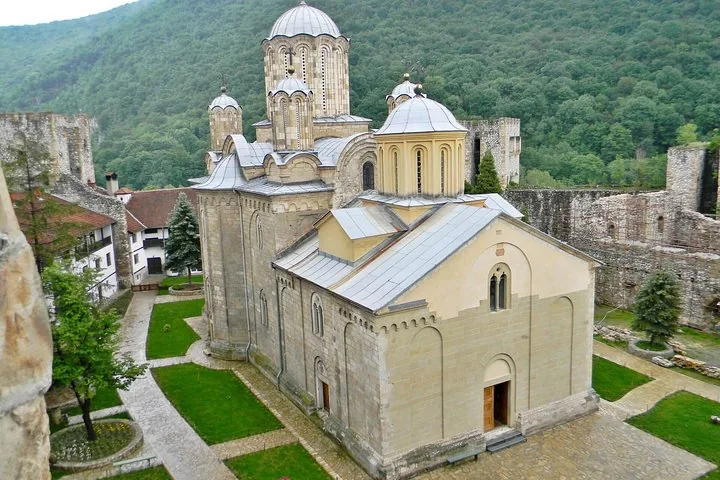
- Church of the Holy Trinity exemplifies Morava architecture.
- Housed the famous Resava School of manuscripts.
In this article
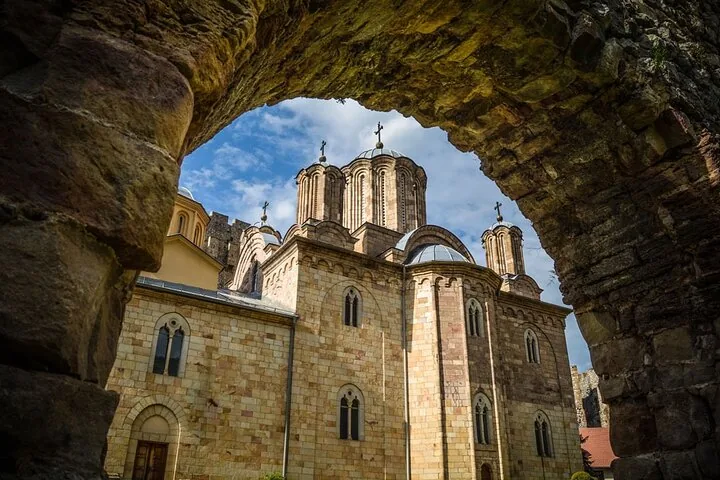
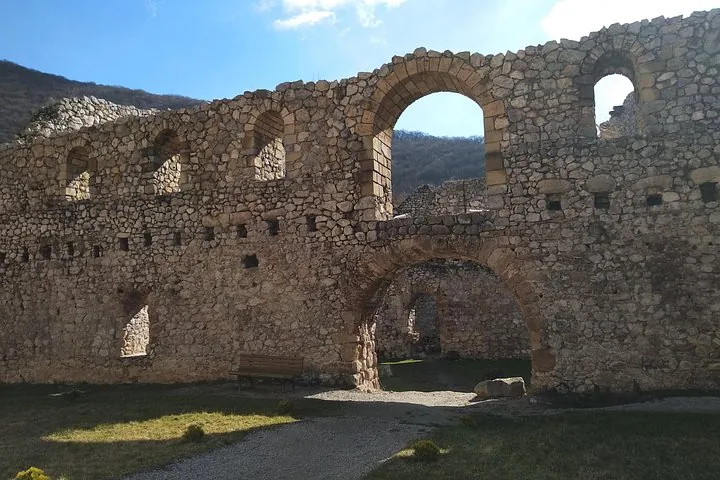
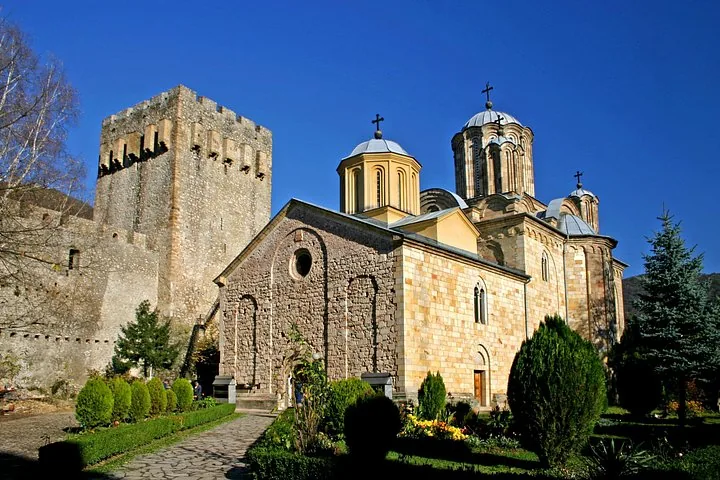
Manasija Monastery, also called Resava, is a major monument of medieval Serbian culture. The complex includes the central church, massive defensive walls with 11 towers, and the remains of the old refectory and scriptorium.
Who built Manasija Monastery?
Serbian ruler Despot Stefan Lazarević built the complex.
Construction took place between 1406 and 1418. Lazarević founded it as a religious center and his future burial site. He is buried in the southern part of the church interior.
What is the Morava school of architecture?
It is a late medieval Serbian architectural style.
The Church of the Holy Trinity represents the peak of this style. It features detailed stonework and elegant archways. The interior holds 15th-century frescoes depicting holy warriors, prophets, and biblical scenes.
Why does the monastery have walls and towers?
The massive walls were built to protect the monastery from Ottoman invasions.
The fortification includes a high stone perimeter and 11 preserved defensive towers. The original design had 12 towers. The largest structure is the Despot's Tower, which features thick stonework and defensive loopholes. You can also see remnants of early 15th-century defensive trenches outside the walls.
What is the Resava school of manuscripts?
It was a prominent medieval center for copying and translating books.
The school operated inside the monastery during the 15th and 16th centuries. Monks and scribes worked in the scriptorium to produce literature. This work made the monastery the center of Serbian literacy and culture at the time.
Who is buried at Manasija Monastery?
The monastery's founder, Despot Stefan Lazarević, is buried inside the main church.
His tomb sits in the southern section of the Church of the Holy Trinity. Visitors must access this area quietly to respect the solemn atmosphere of the active religious site.
Is Manasija Monastery a UNESCO World Heritage site?
It is currently on the UNESCO Tentative List.
The site was added to the Tentative List for World Heritage in 2010. The complex is recognized as an exceptional monument of medieval Serbian culture, religion, and architecture.
Questions travellers ask
Where is Manasija Monastery located?
It is located in the Resava gorge, roughly 135 kilometers south-east of Belgrade. The exact address is Manasija Monastery, 35213 Despotovac, Serbia.
Can you climb the walls at Manasija Monastery?
You can walk around the exterior perimeter to appreciate the massive defensive scale of the monastic fortress. The defensive trenches outside the walls blend into the natural landscape.
How long does it take to visit the historical grounds?
Viewing the Old Refectory Ruins, the Resava Scriptorium, and the courtyard takes about 30 minutes in total.